USB Devices in Citrix Virtual Environment

The Citrix logo

Before you proceed to the guide, it’s important to note that the trial version of XenServer or XenCenter doesn’t support Citrix USB redirection. Sadly, you cannot try it out without Enterprise Edition. However, if you own an Enterprise license, or have been provided a Citrix Cloud account by your employer, there are 3 components to Citrix USB passthrough – XenCenter VM properties, XenServer policies, and the Citrix Web Studio ICA USB policy.

Note: USB redirection in Citrix has severe restrictions, which you can learn about further in the article.

How to Enable USB Passthrough in XenCenter
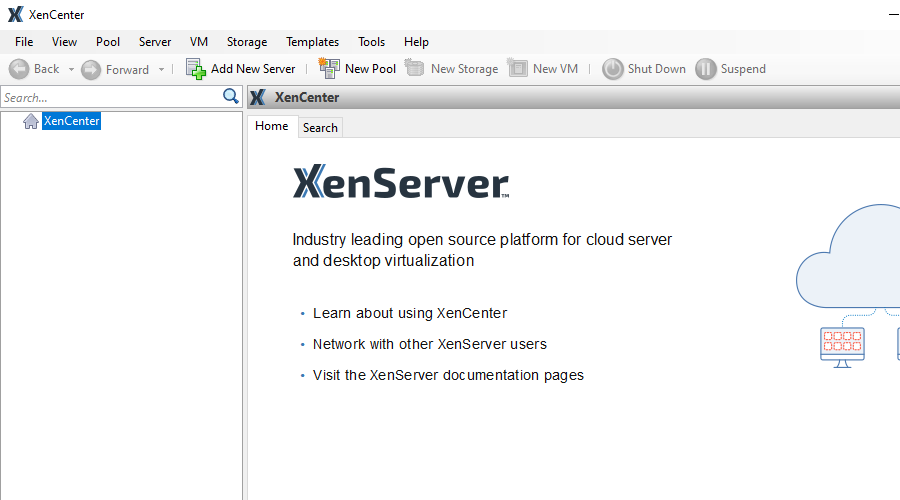
XenCenter interface on Windows

XenCenter is a Windows application that allows you to configure XenServer instances and virtual machines. You can use XenCenter to allow the redirection of local USB devices to the selected VM.

  1. Launch XenCenter.
  2. Find the VM on the resource list on the left.
  3. Right-click the virtual machine and select “Properties”.
  4. Select the “USB” tab.
  5. Select the USB device you want to use in your VM and click “Attach”.


Device removal is done from the same dialogue.

Checking the XenServer

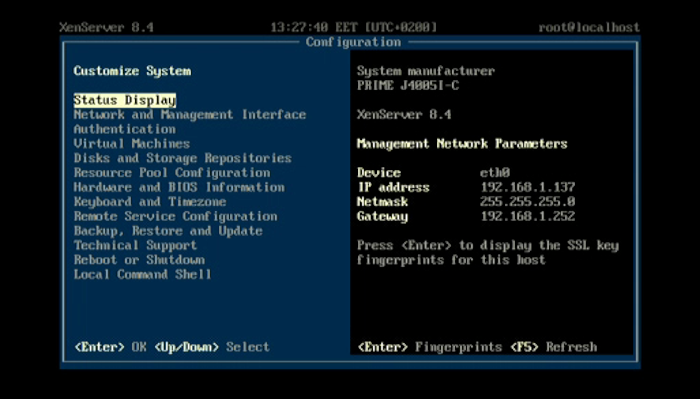
The status screen of the XenServer interface

In addition to the instructions below, you can follow this link to learn how to handle Citrix XenServer USB with the help of a software solution. Otherwise, follow the steps.

  1. You can gain access to XenServer through the server console in XenCenter, or directly, if you have a display and a USB keyboard connected to it.

    • In XenCenter, highlight your server in the resource list and click the “Console” tab.

    • In XenServer’s UI, select “Local Command Shell”.

  2. Once you have a console opened, you can manipulate files. The file you need to edit is located in /etc/xensource/usb-policy.conf. The nano text editor is available in XenServer’s shell.
  3. If your device is denied in the config file, remove the line or change DENY to ALLOW.
Note: DENY or ALLOW statements can be made broadly, for all devices with the given vendor ID. This can pose a security risk, so it’s better to remove DENY lines rather than changing them to ALLOW.

Now to explicitly allow Citrix USB redirection for your device. On the local machine, you can run lsusb (if on Linux) or find the USB device’s ID in the Device Manager (on Windows), and add it to usb-policy.conf to explicitly allow it.

  1. When you run lsusb, every device will have its ID displayed:

    ID 09da:2268

    The part before the colon is the vendor ID, the part after is the product ID.

  2. Having found out the IDs, you can now add the following line to usb-policy.conf:

    ALLOW: vid=09da pid=2268

    Simply substitute your device’s VID and PID for the example ones.


Allowing passthrough on XenServer is not enough for it to start working, it simply lets you use the passthrough property in XenCenter.

Note: the configuration file can change on server restarts.

USB Policies in the Citrix Web Studio

Citrix Web Studio can be accessed through your browser. The address will be set by your administrator. The USB policy set in the Studio acts on all subordinate virtual machines, and can override the XenServer setting (since the USB connection will be blocked by the VM itself).

The USB policies are located under the ICA category. The policy rules are formatted like lines in /etc/xensource/usb-policy.conf on XenServer. However, you will likely need to contact your Citrix administrator to change them.

Citrix USB Passthrough Restrictions

Native XenDesktop USB redirection is very limited. In addition to the fact that you need Premium to use it, it also supports a maximum of 6 devices, and doesn’t allow important VM operations – including Snapshot and Suspend – to be done while it’s enabled.

If you’re looking for a solution that fully works with virtual machines and doesn’t have any of the aforementioned restrictions, try USB Network Gate instead.

USB Network Gate - Alternative to Native Citrix Passthrough

USB Network Gate is an app that can be installed in a Citrix virtual machine to let it access external USB devices, even remote ones. A USB Network Gate server can share up to 10 devices with a basic license, and it doesn’t prevent the VM from making snapshots or suspending, either.

Learn how to use USB Network Gate in the following video.