USB Redirector Software: Best Tools Compared

Your USB device, such as a hardware dongle, scanner, security key, or fingerprint reader, is connected to one computer, and there are times when you need to access it from another. USB Redirector software helps with this. It makes that device act as if it’s directly attached to a different machine, whether across a local network or over the internet.

We’ll look at four tools that handle this well in 2026:

FlexiHub — ideal for internet sharing with minimal setup required

USB Redirector (IncentivesPro base) — suited for Windows-focused setups with a one-time license

USB Network Gate — good for large company setups that use Citrix, VMware, or RDP, where multiple users need access

VirtualHere — a strong choice for Raspberry Pi, NAS devices, embedded Linux, and home lab use

What Is a USB Redirector?

A USB redirector is software that lets a computer share a locally connected USB device with another computer over a LAN, VPN, or the internet. The remote computer can then use the device almost as if it were plugged in locally.

This technology is also called USB over IP. In simple terms: plug a USB device into Computer A, and use it from Computer B.

How USB Redirector Works

USB redirector software uses two parts: a server app on the computer with the USB device, and a client app on the computer that needs remote access.

The server shares the physical USB device, sends its USB traffic over the network, and the client creates a virtual USB connection on the remote computer. The remote system then detects the device and uses its normal driver.

Performance and compatibility depend on the USB device type, driver support, and network quality.

Best USB Redirector Software in 2026

Full Software Comparison Table

We created a table that shows how the four tools compare across the main areas.

Criterion FlexiHub USB Redirector (base) USB Redirector TS Edition USB Network Gate VirtualHere
License type Subscription Perpetual Perpetual Perpetual Perpetual
Paid Plan from $39.99/mo $74.99 Vendor sells separately; edition-specific pricing $159.95 $49
Free / trial option 30-day demo, up to 5 remote devices 15-day trial, up to 2 devices; free Windows client for Windows-to-Windows connections 15-day trial, up to 2 devices Free version available; Trial mode; paid license removes trial restrictions; client software is free
Server OS Windows, macOS, GNU/Linux, Android, Raspberry Pi OS Windows, Linux with a separate product Windows Windows, macOS, Linux, Android Windows, macOS, Linux, Android, Raspberry Pi, NAS
Client OS Windows, macOS, Linux, Android Windows, Linux with a separate product Windows, Linux indirect Windows, macOS, Linux, Android Windows, macOS, Linux, Android
Works over LAN / direct network
Encryption 2048-bit SSL Not clearly specified on current product page Not clearly specified on current product page TLS 1.3 + optional password authorization SSL supported
RDP / Remote Desktop support Not the main base-product strength Indirectly usable, but not positioned the same way as TS/RDP-focused products
Per-session USB isolation No equivalent headline feature
Per-user USB isolation Session-focused; per-user wording not clearly primary No equivalent headline feature
Citrix / VMware / VDI support VM/RDP support marketed, but not strong Citrix/VMware feature-page emphasis No clear native VDI focus RDP/Terminal Server focused (VMware, ESX, Citrix XenDesktop, Hyper-V) Not a native Citrix/VMware feature-page focus
SDK / OEM / white-label Enterprise custom edition / white labeling / dedicated server No clear SDK/OEM page found for base product No clear SDK/OEM page found (SDK) API available; not positioned as broad OEM/white-label

FlexiHub

FlexiHub USB Redirector

Developed by: Electronic Team, Inc.

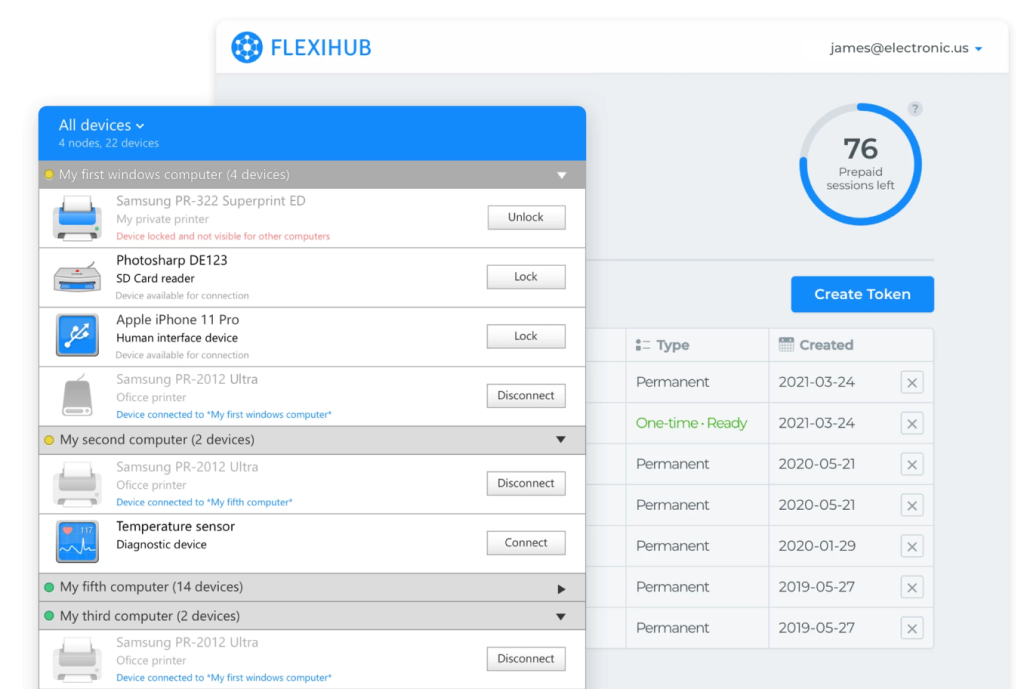
FlexiHub is one of the best USB redirector tools for those who want something easy to get started with. What makes it different is how it handles device access. Once you log into your account, every computer linked to it shows its connected USB devices in one shared list. You don’t need to set up sharing on your own on the host machine.

From the client side, you just open FlexiHub and view the list of available devices. Then, click Connect. The connection works even if the computers are in different locations, since it runs through FlexiHub’s cloud service. That means you don’t need to change router settings, set up a VPN, or adjust your firewall.

Supported OS:

  • Windows
  • macOS
  • GNU/Linux
  • Android
  • Raspberry Pi OS


Main features:

  • One shared device list across all computers in your account
  • Cloud-based connection that works over the internet without extra network setup
  • The client chooses and connects to the device without needing manual host-side sharing after installation and login
  • Works across different operating systems
  • 2048-bit SSL encryption
  • The computer reconnects after disconnection automatically
  • COM port redirection (Windows version)
  • Team dashboard for managing users (business plans)
  • Login tokens for giving access without handing over account credentials


Trial:

  • 30-day free demo account
  • 5 device connections included
  • No credit card required
  • One demo period per account


Pricing:

Personal plan at $39.99/month.

Business Starter (up to 5 team members, 300 connections) at $79.99/month.

Business Plus (up to 10 team members, 1,000 connections) at $129.99/month.

Enterprise plan pricing is provided on request.


Best for:

Remote workers who need to access USB devices over the internet with just a few steps.

Teams where users can connect on their own after the software is installed and configured will also benefit from it.

USB Redirector by IncentivesPro

USB Redirector by Incentive Pro for USB Redirection

Developed by: IncentivesPro

People who use the keyword “USB Redirector” to search for USB redirector software are usually after this specific tool by IncentivesPro. It mainly works in Windows environments and is designed for use over local networks or VPN connections. It is also sold as a one-time purchase instead of a subscription.

Note that “USB Redirector” is unique in a way that it isn’t just one product. It comes in different editions, each with its own set of capabilities, including for Remote Desktop use and multi-user setups.

There is also a separate free USB redirector client, which you can use to connect to Windows servers without paying anything. In this setup, only the server part requires payment.

Supported OS (Server): Windows XP SP3 through Windows 11 and Windows Server 2025. Linux client support is available through a separate USB Redirector for Linux product.

Supported OS (Client): Windows XP SP3 through Windows 11 and Windows Server 2025

IncentivesPro Editions and Their Differences

This part is important because each edition works a bit differently, and the right one depends on how you plan to use it.

1. USB Redirector (Base Version)

Basic USB sharing over a network

Good for simple setups or one-to-one use

No native separation between multiple users

2. USB Redirector RDP Edition

Built for Remote Desktop (RDP) sessions

Lets USB devices work inside normal remote desktop sessions

Meant for single-user remote access

3. USB Redirector TS Edition (Terminal Server)

Made for setups with multiple users on the same system

Includes two things:

  • It separates USB access by user session in supported Terminal Server/RDS environments
  • It helps prevent users from seeing or using USB devices redirected into other sessions


Best for:

  • Terminal Server
  • Remote Desktop Services (RDS)
  • Shared Windows environments

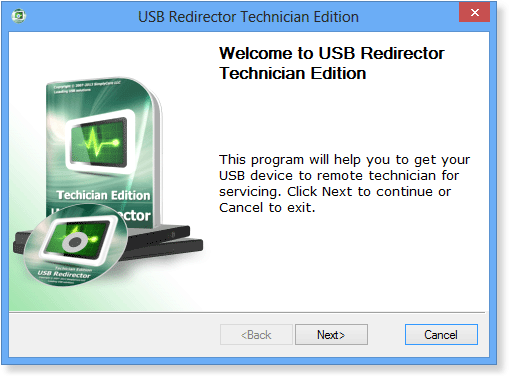
4. USB Redirector Technician Edition

Made for remote support or on-site troubleshooting work

Lets technicians access USB devices on a customer’s computer wherever they are

Uses a subscription model instead of a one-time license

Pricing

USB Redirector (base): from ~$74.99 (perpetual, depends on device count)

TS Edition: from ~$134.99 (perpetual)

Technician Edition: from ~$9.90/month or ~$99/year

Client: free (Windows only)

Pricing changes depending on how many devices and licenses you need

Main features:

  • Runs as a Windows service — keeps working even after reboot; no need to open the app
  • Free USB redirector Client for Windows (no license needed on client devices)
  • Callback mode — helps when the connection can’t be made directly
  • Per-session isolation (TS Edition) — keeps users on a Terminal Server from seeing or using other users’ devices
  • RDP Edition for computers accessed through Remote Desktop sessions
  • TS Edition for systems that people use to work together
  • Technician Edition for remote support teams that need to access USB devices on customer computers


Trial: A free trial is available for the main software. The client app doesn’t have a separate trial. You can test it using the full USB Redirector trial.

Best for: Companies running only Windows systems, as well as offices that already use VPNs between locations. IT teams that prefer a one-time purchase instead of ongoing subscriptions will also find it useful.

USB Network Gate

USB Network Gate for USB Redirection

Developed by: Electronic Team, Inc.

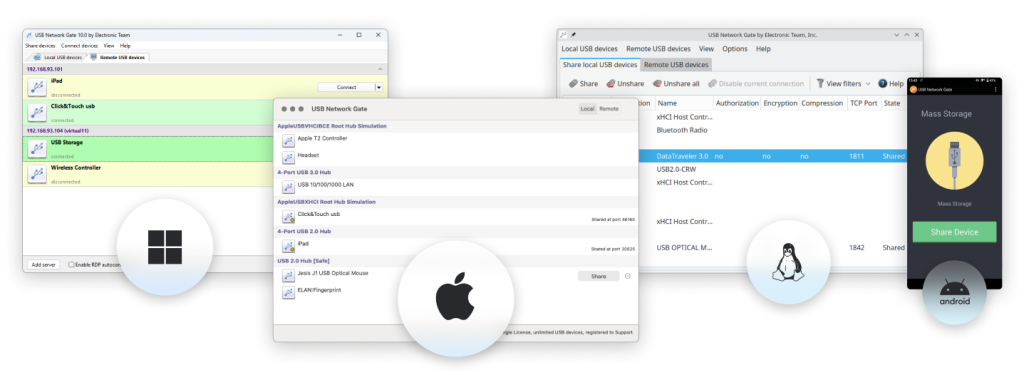
USB Network Gate is another USB redirector software option you can rely on. It’s different from FlexiHub mainly in how the administrator handles sharing. Here, the admin picks what gets shared before anyone can connect. This can be specific USB devices or even entire USB ports. Nothing becomes available to other users unless the server side explicitly allows it. This makes it a better fit for environments where it’s much more important to have control over access than being convenient.

Unlike FlexiHub, USB Network Gate does not charge per connection or session. You buy the license once and can connect as often as needed. It uses a direct network connection between machines rather than a cloud relay, so internet access usually requires a VPN, direct routing, or other network configuration.

You can use a free USB redirection software version for non-commercial purposes on a single device.

Supported OS:

  • Windows 7 SP1 through Windows 11 and Windows Server 2025 (x86, x64, ARM64)
  • macOS 10.14 and newer
  • Linux (CentOS Stream 9+, Fedora 36+, Ubuntu 16.04+, Debian 10+, Linux Mint 20.1+)
  • Android 5.0+


Main features:

  • Server-side control — the admin must manually share each device or port before it becomes accessible
  • USB port sharing — everything plugged into a shared port becomes available remotely
  • One-time license — no ongoing per-session charges
  • Passwords can be added to shared devices for security
  • Supports RDP/Terminal Server scenarios with session-based USB device access controls
  • Works with VMware ESX/ESXi, Citrix XenDesktop, and Microsoft Hyper-V
  • Compatible with different operating systems
  • Hot-swap support — swapping devices will make the client see the new device right away
  • SDK/OEM option for integrating USB redirection into third-party products
  • TLS 1.3 encryption


Free personal edition: share 1 local USB device indefinitely for non-commercial use.

Full trial: 14 days.

Pricing: Starts at $159.95 with a one-time license for up to 10 shared devices. Corporate and multi-seat licenses of the app are also available. Previous users get a 50% upgrade discount.

Best for: IT administrators who want to control everything related to USB sharing, as well as enterprise environments running Citrix or VMware virtual desktops. It also suits organizations that favor a one-time license over ongoing per-session charges.

VirtualHere

VirtualHere for USB Redirection

Developed by: VirtualHere Pty. Ltd. (Australia)

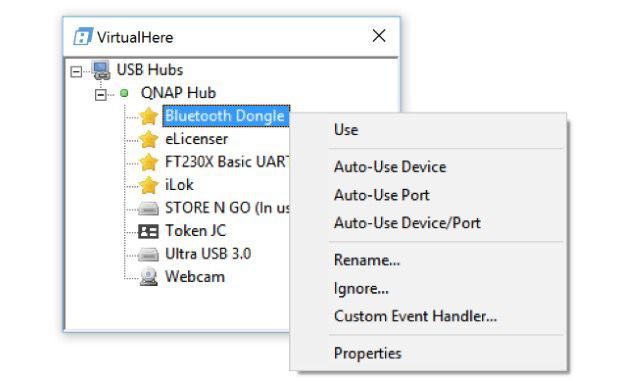
VirtualHere takes a simpler approach to pricing. The client is free, and the server can share one USB device at a time in trial/free mode. A paid server license removes this restriction. Should you need more devices, you can buy a full server license with a one-time payment.

This USB redirector tool runs well on Raspberry Pi and other small Linux-based systems, which makes it a good fit for setups you want to leave running all the time.

Supported OS (Server):

  • Windows
  • macOS
  • Linux
  • Raspberry Pi (all models)
  • Android
  • Various NAS platforms (Synology, QNAP, ASUSTOR)
  • Steam Link


Supported OS (Client):

  • Windows
  • macOS
  • Linux
  • Android


Main features:

  • Free server for one USB device (no expiry)
  • Very lightweight—runs smoothly even on a Raspberry Pi Zero
  • Finds devices on your local network automatically (no need to enter IPs)
  • SSL encryption
  • API for automation and custom setups
  • Works with Steam Link (official Steam version available)
  • Supports many embedded Linux systems, including OpenWrt routers


Trial/Free tier: You can share one USB device at a time. To remove trial/free-mode restrictions, you’ll need a paid server license.

Pricing: A full server license costs $49 one-time, removes trial restrictions, and is bound to the server hardware. The client stays free. Some versions may be priced separately.

Best for: Home users, home labs, maker setups, and Raspberry Pi USB servers. It’s also a good fit if you need a free one-device setup that doesn’t expire or a low-cost, always-on option for teams.

Which One Should You Choose?

Your situation Best choice
Internet sharing, no VPN or port forwarding FlexiHub
Windows-only + perpetual license USB Redirector
Free option (1 device, permanent) VirtualHere or USB Network Gate free personal edition
Citrix, VMware, or enterprise VDI USB Network Gate
Raspberry Pi or embedded Linux USB server VirtualHere
IT technician servicing customer devices remotely USB Redirector Technician Edition
Multi-user Terminal Server / RDP environment USB Redirector TS Edition

How to Set Up USB Redirector with FlexiHub

Most USB redirector software options work the same way: you install the app on both computers, share the device from one side, then connect to it from the other. What changes from tool to tool is where sharing is set up, how devices are found, and how you start the connection.

Here’s a simple step-by-step process using FlexiHub, it’s one of the easier ones to set up and doesn’t need much network tweaking.

1. Sign up for a free trial on the FlexiHub website.
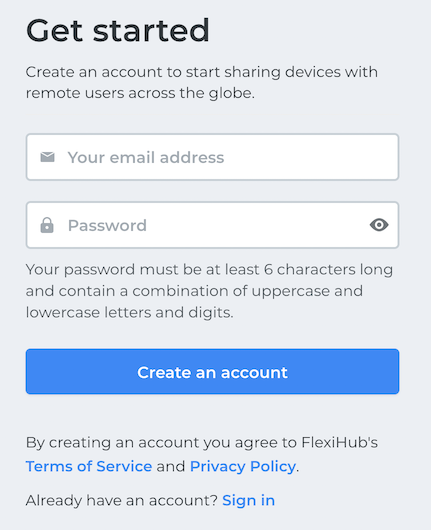
Sign up FlexiHub

2. Download and install FlexiHub on all the computers you’ll be using, including the one with the USB device plugged in.
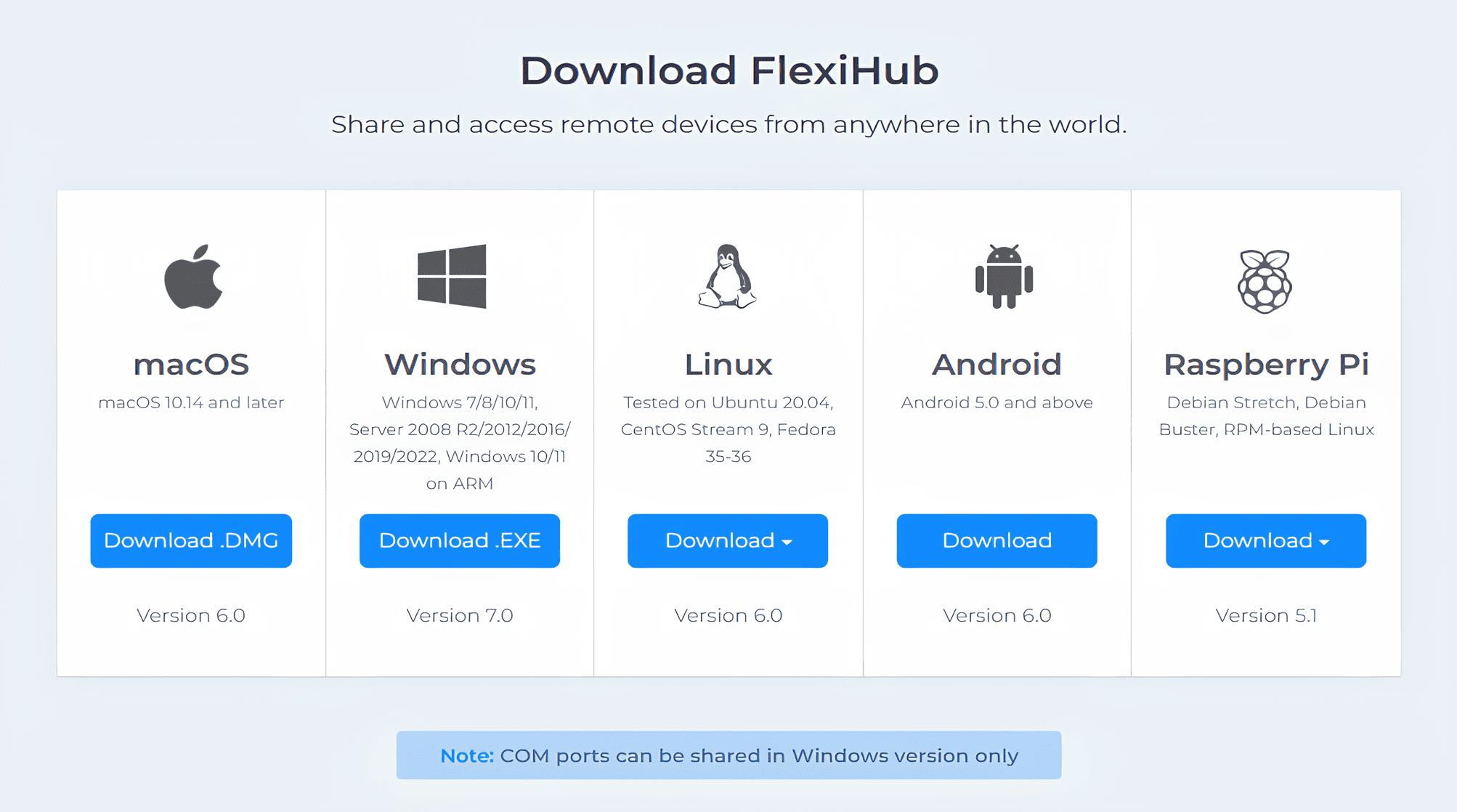
Download and install FlexiHub

3. Open the app and sign in. A list of connected devices will show up right away.

Note: Logging in on the website is mainly for overseeing your account and choosing how many connections you need. You’ll use the same login details inside the app when you actually connect USB devices to remote machines.
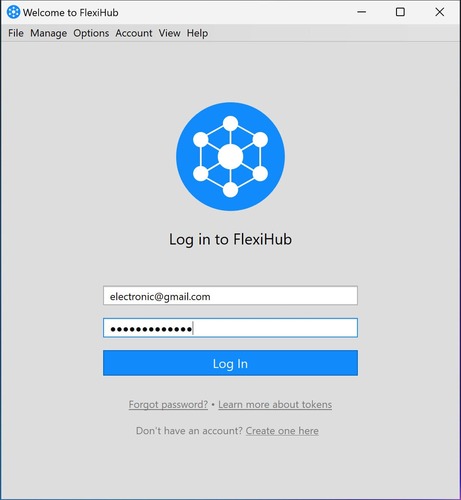
FlexiHub sign in

4. On the client computer, open FlexiHub and begin your remote session.

5. During the session, go to the remote machine to open FlexiHub and sign in as well.

6. Find the USB device you want from the list of USB devices, then click Connect.
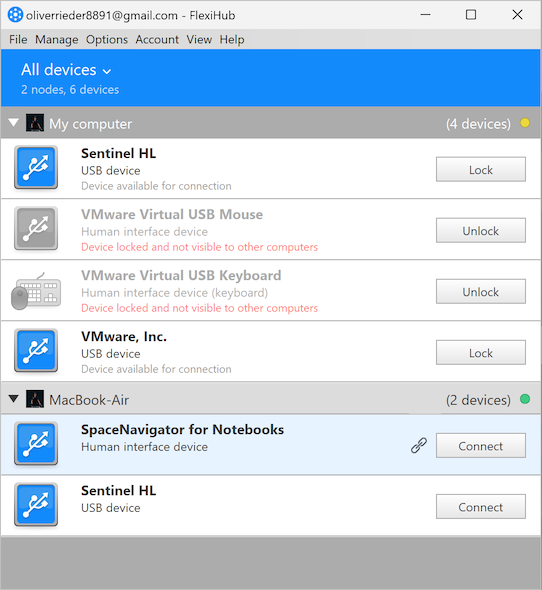
USB Redirector Connection
Note: By default, all client machines can access USB devices connected to computers logged into your FlexiHub account. You can restrict access for specific devices using a password so others cannot access them without permission. You can also block all remote access to them.

Common Problems and Quick Fixes

Device doesn't appear on the remote machine

You might encounter this issue when the driver installation fails. Remove the device, then install it again as an admin. Open Device Manager and look for yellow warning icons — these point to a driver problem or failed device setup, not a network issue.

Connection drops immediately

A firewall, antivirus tool, unstable network, driver issue, or license/session limit may be blocking the connection. FlexiHub usually works over HTTPS traffic on port 443. For direct-network tools, check the vendor documentation for the required ports and add the software to your antivirus allowed list.

Device shows Code 43 error

The remote computer may be missing the correct driver, or the device may have failed to enumerate correctly. Install the device’s official USB driver on the remote PC, reconnect the device, and confirm that the USB redirector supports that device type.

USB redirection not working inside an RDP session

Remote Desktop’s native redirection supports only a limited set of devices and resources. Also, it typically fails with USB dongles, scanners, and custom hardware. These devices usually need dedicated USB redirector software installed on the RDP host. If you use a managed Windows setup, check Group Policy here: Computer Configuration → Administrative Templates → Windows Components → Remote Desktop Services → Device and Resource Redirection. Disable the “Do not allow supported Plug and Play device redirection” option.

Frequently Asked Questions

Yes. VirtualHere gives you a free server for one USB device that you can use with no expiry date. USB Network Gate also offers a free personal edition for one device, limited to non-commercial use. Windows Remote Desktop includes a basic native feature to redirect drives and printers, but it does not support full USB device sharing. Most paid tools also have free trials that last about 14–30 days.

Prices vary depending on the tool and license type. Some options are free, such as VirtualHere (single-device server) and USB Network Gate’s personal edition. Paid options include one-time licenses, such as:

VirtualHere full server (~$49)

USB Redirector (~$74.99)

USB Network Gate (~$159.95)

FlexiHub Personal (~$39.99/month)

Technician or advanced editions are usually sold as ongoing subscriptions (~$9.90/month or ~$99/year)

You might experience this problem when the driver is missing or fails to install on the remote PC.

Try these steps to fix it:

Reinstall the USB redirector software with administrator rights

Open Device Manager and check for warning icons like Code 43

Install the official driver for the device on the remote computer

USB redirector tools make the device appear as if it is directly plugged in, so the normal manufacturer driver is still required.

No. These two things do completely different jobs.

USB tethering shares a phone’s internet connection through USB.

USB redirection shares actual USB devices over a network.

They are not interchangeable.

Yes. USB redirector software can work through a VPN because they rely on standard network communication. A VPN simply provides the connection path between devices.

If you want to avoid setting up a VPN, some tools like FlexiHub use a cloud-based connection method so devices can connect over the internet — configuring routers or firewalls is no longer needed.